Start donating poor people

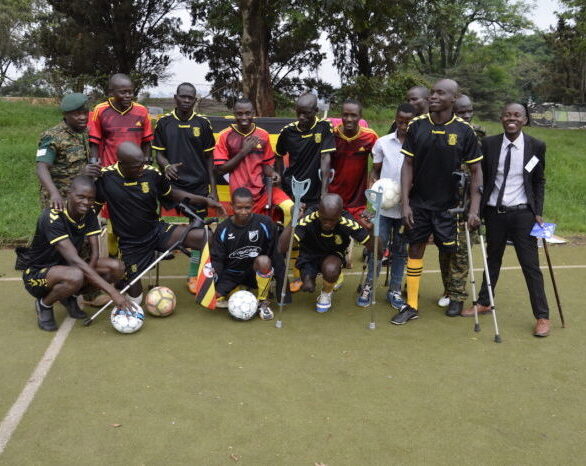
Disability Sports at UNAPD

Image
Image

Disability Sports Program

Disability Sports at UNAPD: Breaking Barriers, Empowering Lives!

Background:

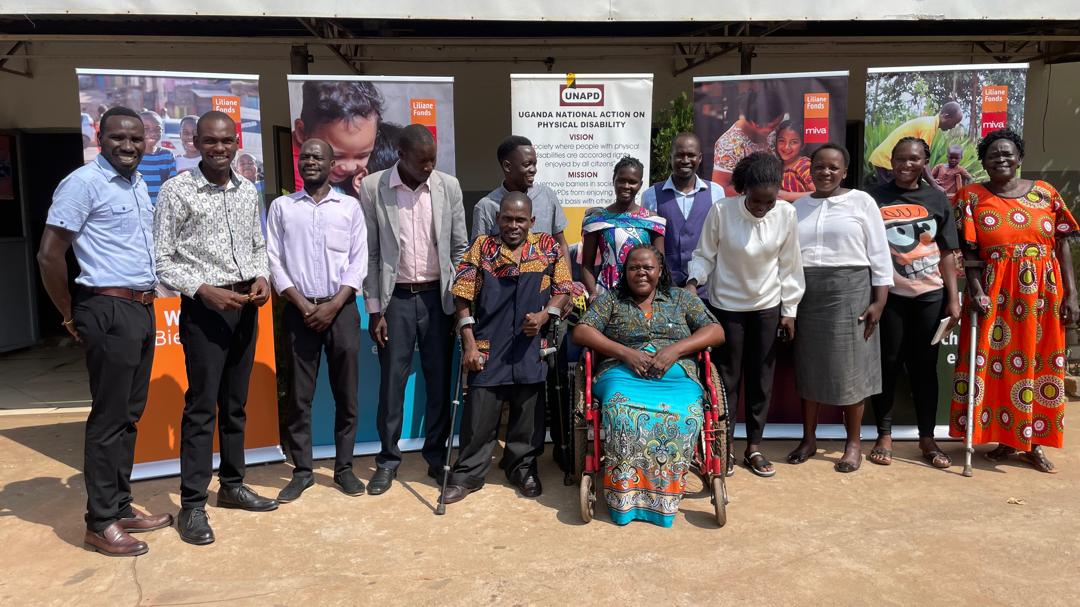
Uganda National Action on Physical Disability (UNAPD) was established in 1998 to give persons with physical disabilities who make up over 60% of persons with disabilities (PWDs) in Uganda a strong, unified national voice. Guided by our vision of "a society where persons with physical disabilities live in dignity" and our mission to remove the barriers that prevent them from enjoying their rights, UNAPD today brings together 46 registered district member associations and over 8,000 individual members across the four regions of the country.

In responding to the needs of her members, eight years ago, UNAPD adopted community-based sport as a deliberate strategy to mobilize, develop, and empower PWDs recognizing that most persons with disabilities live not in institutions, but in ordinary communities with their families and caregivers. That decision has grown into one of our most powerful inclusion tools: today, over 2,000 PWDs actively participate in disability sport across Eastern, West Nile, and Northern Uganda.

Purpose:

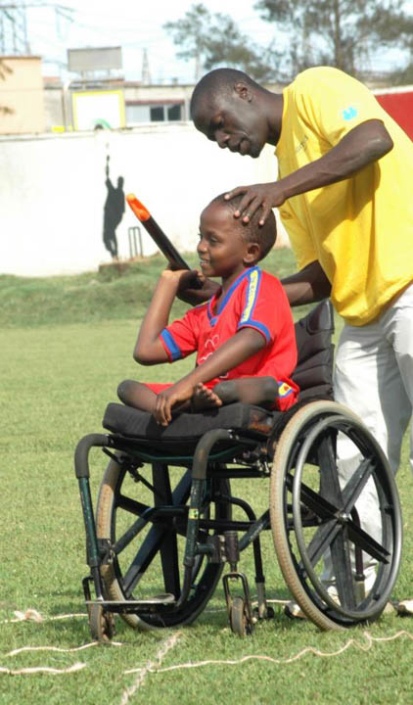
Disability sport at UNAPD exists to drive social inclusion, empower individuals living with physical, sensory, or intellectual impairments, and dismantle deep-seated community stigma. Working alongside partners such as Para-sport Denmark and the Uganda Paralympic Committee, we build community sports groups, train local leaders and coaches, and advocate for inclusive national sport policy turning the playing field into a launchpad for confidence, rights, and opportunity for all persons with disabilities.

Why Disability Sports?

Because sport is a human right not a privilege reserved for the able-bodied. No one should be left on the sidelines because of gender, race, religion, or disability.
Sport does more than build athletes. For PWDs across Uganda, it:

Our sport programmes are deliberately inclusive on every axis spanning hearing, visual, physical, and other sensory impairments; involving men, women, children, youth, and elders; and welcoming parents, caregivers, and community members without disabilities to play alongside PWDs.

Disability Sports Disciplines:

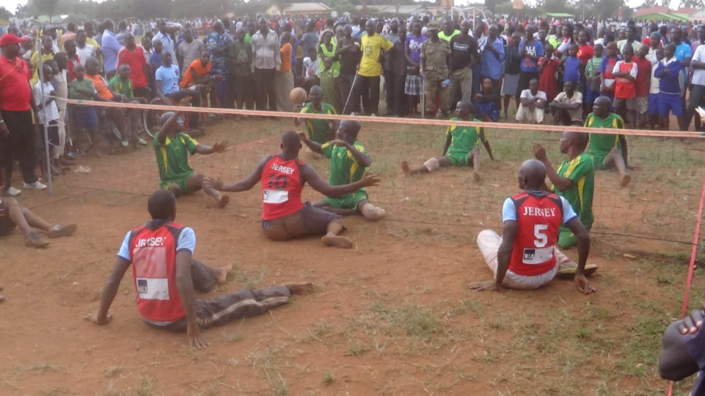
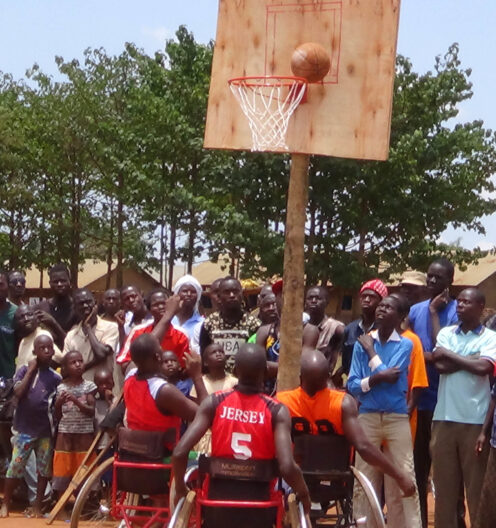
UNAPD has introduced and grown 10 adaptive sport disciplines across the communities we serve:

These disciplines are led by 88 trained coaches (44 men, 44 women) identified and mobilized through UNAPD's district associations, trained in partnership with mainstream sport federations and para-sport experts. These coaches don't just run drills they identify talent, plan training schedules, and are the backbone that keeps every community sport group running.

UNAPD Disability Sports Disciplines: A Guide

UNAPD has introduced and grown ten adaptive sport disciplines across its project communities. Each discipline is purpose-built (or purpose-adapted) for a specific type of impairment, with its own rules, equipment, and at the international level its own classification system to keep competition fair. Below is a short technical guide to each.

Sports Groups and Associations

UNAPD has built 30 community-based PWD sport groups across seven project districts, each independently led by elected chairpersons, secretaries, and treasurers, and formally registered with their districts by the district community development officers as community based organisations:

These groups are backed by UNAPD district associations and technically by the District Disability Sport Caucuses in Nebbi, Pakwach, Gulu, Kasanda, Busia, Namayingo, and Lira as technical committees of 8–10 members from education, sport, health, and community development departments, most chaired by the District Sport Officer. Meeting quarterly, these caucuses ensure disability sport isn't just a project activity but a permanent, budgeted part of district planning built to outlast any single funding cycle by the local government.

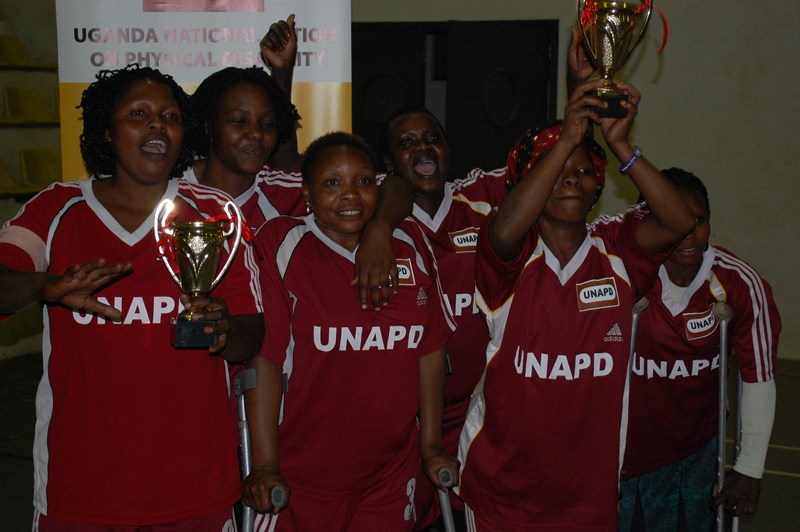
Achievements

Lessons Learned:

Drawn from nearly a decade of implementing community-based disability sport across Eastern, West Nile, and Northern Uganda, several consistent lessons emerge from UNAPD's model, insights that shape how the organization continues to design and adapt its sport programming.

Sport works best as an entry point, not an endpoint

Perhaps the clearest lesson from UNAPD's experience is that sport rarely stays "just sport" once a PWD engages with it. Embedding Village Savings and Loan Associations (VSLAs) directly into weekly sport group meetings rather than running them as a separate initiative proved far more effective at driving economic participation than a standalone livelihoods programme might have. Members who came for the game stayed for the savings group, and vice versa. The lesson: disability sport programming achieves more when designed from the outset as a multi-purpose community platform, not a single-issue activity.

Local leadership structures outlast project funding but only if built early

The formation of legally registered, member-led sport groups (with elected chairs, secretaries, and treasurers) and quarterly District Disability Sport Caucuses was not an afterthought bolted onto programming but it was foundational. Groups that had real governance structures and district-level institutional anchors continued functioning as genuine community assets, not just project outputs. The lesson: sustainability isn't something to plan for at project close; it has to be built into group formation from day one, with local leadership development running in parallel with, not after the sport activities themselves.

Representation in coaching matters as much as representation in play

Deliberately training an equal number of male and female coaches (44 and 44) was a specific choice, not a default outcome. Without that deliberate targeting, coaching cohorts in most community sport settings skew heavily male, which in turn shapes who feels welcome to join and who advances into leadership. The lesson: gender balance in disability sport can't be assumed to follow from gender balance in participation. It requires the same intentional quota-setting at the coaching and leadership level as at the beneficiary level.

Disability-inclusive design still needs disability-type-specific design

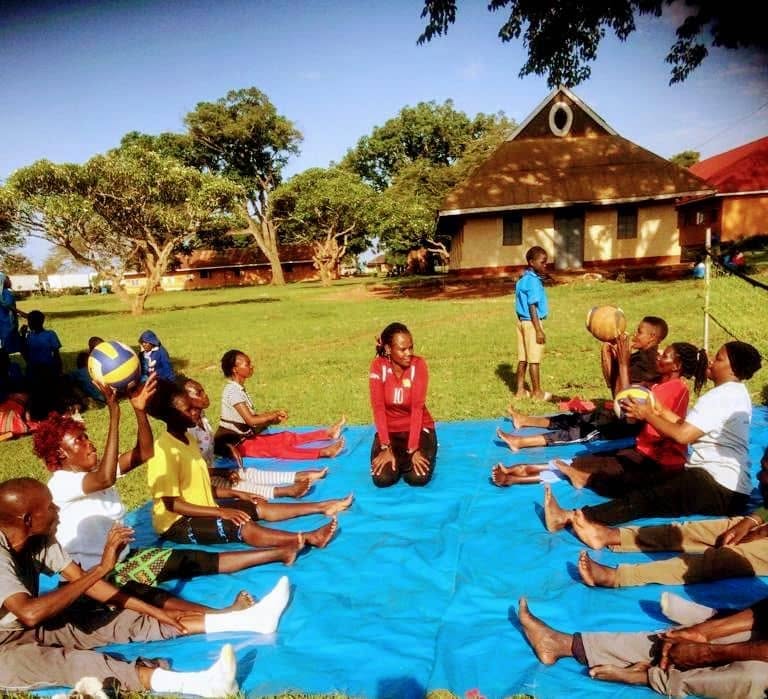
"PWD sport" is not one intervention, it is at least ten, each requiring different equipment, different coaching skills, and different community sensitisation messages. A single generic "disability sports programme" risks defaulting to whichever impairment type is easiest to reach (often physical/mobility impairments), while athletes with hearing, visual, intellectual, or psychosocial disabilities get left behind by design, not intent. The lesson: genuine inclusion requires actively building out the full range of disciplines i.e. sitting volleyball alongside goalball alongside boccia, rather than assuming one adapted sport serves all disability categories equally.

Unlikely institutional partnerships can unlock scale that NGOs alone cannot

The partnership with the Ministry of Defence and UPDF rehabilitation centres is arguably UNAPD's most distinctive lesson: a civil society disability organisation and a national military institution found common ground because both had an interest in effective rehabilitation outcomes. That partnership brought resources, institutional reach, and legitimacy that a standalone NGO programme would struggle to replicate and it has since led the UPDF to adopt sport as an ongoing internal programme for soldiers with disabilities, meaning the impact now continues independent of UNAPD's direct involvement. The lesson: cross-sectoral partnerships with institutions outside the usual disability/development space can create outsized, self-sustaining impact but they require finding the genuine shared interest, not just requesting support.

Community sport is often the first place PWDs learn they have a right to play

UNAPD's own reporting notes that "massive awareness" was needed simply because many PWDs did not know sport participation was a right they held not a privilege contingent on ability. This is a foundational lesson often underestimated in disability programming generally: structural barriers (accessible facilities, adapted equipment, trained coaches) are necessary but not sufficient. Rights-awareness has to be built alongside physical access, or newly created opportunities go underused simply because the intended participants don't yet see themselves as entitled to them.

Involving non-disabled community members strengthens, rather than dilutes, inclusion

Deliberately welcoming caregivers, parents, and community members without disabilities into sport groups and VSLAs was a specific design choice that paid off in reduced stigma. When sport groups are PWD-only, they can inadvertently reinforce the idea of disability as a separate category requiring separate spaces. Mixed participation normalises PWDs as full community members engaged in ordinary community life. The lesson: inclusion sometimes means resisting the instinct to create disability-exclusive spaces, even when the programme's origin and funding is disability-specific.

Multi-sectoral district caucuses convert goodwill into institutional commitment

Bringing District Sport Officers, Education Officers, Health Special Needs Officers, and DCDOs into the same coordinating body rather than leaving disability sport as the sole concern of the CDO or a district association has been key to getting disability sport reflected in actual district planning and budgeting, rather than remaining a well-meaning but unfunded aspiration. The lesson: institutionalisation requires putting disability sport on the agenda of the offices that already control budgets and planning cycles, not just creating new disability-specific structures alongside them.
Call to Action

Every ball passed, every match played, every coach trained is a barrier broken.
Behind every number in this story is a person who found community, confidence, and independence on a playing field that once excluded them. But our work is far from finished as thousands more PWDs across Uganda are still waiting for the chance to play, to lead, and to belong.

Your partnership can change that. Whether through funding a sport discipline, equipping a district caucus, training the next generation of coaches, or sponsoring a community sport group's equipment and uniforms. Every contribution directly expands who gets to play.

Partner with UNAPD to expand what's working:

Details of sports groups/associations

# Name of Sport Group Location
1 Nebbi Municipality PWD Club Municipality
2 Acidipe PWD Sport Association Kucwiny Sub County
3 Parombo Sub County PWD Sport Group Parombo Sub County
4 Mbaro East Sport and MDD Association Akwok Sub County
5 Nebbi Sub County PWD Sport Group Association Nebbi Sub County
6 Pawong PWD Sport Association Jupangira Sub County
7 Parombo Town Council PWD Sport Association Parombo Town Council
8 Nimungu Olyeku Disability Sport Group Nyaravur Sub County
9 Akworo PWD Sport Group Association Nyaravur Sub County

# Name of Sport Group Location
1 Pakwach Sub County PWD Sport Group Pakwach Sub County
2 Pakwach Town Council PWD Sport Group Pakwach Town Council

# Name of Sport Group Location
1 Buyinja Disability Sport Group Buyinja Sub County
2 Bakasak Majja Sport Group Namayingo Town Council
3 Buswale PWD Sport Association Buswale Sub County
4 Banda PWD Sport Group Banda Sub County

# Name of Sport Group Location
1 Busime Inclusive Disability Sport Group Busime Sub County
2 Masaba PWD Sport Group Masaba Sub County
3 Lumino PWD Sport Association Lumino Sub County
4 Busia Municipality PWD Sport Group Busia Municipality
5 Dabani PWD Sport Group Dabani Sub County
6 Buwumba PWD Sport and Saving Group Buwumba Sub County
7 Buwembe Disability Sport Association Buwembe Sub County
8 Buhehe Disabled Sport Association Buhehe Sub County
9 Lunyo Disability Sport Group Lunyo Sub County
10 Buyanga PWDs Sports Group Buyanga Sub County

# Name of Sport Group Location
1 Naluntutu PWD Sport Group Naluntutu Sub County
2 Kalwana Disability Sport Group Kalwana Sub County

# Name of Sport Group Location
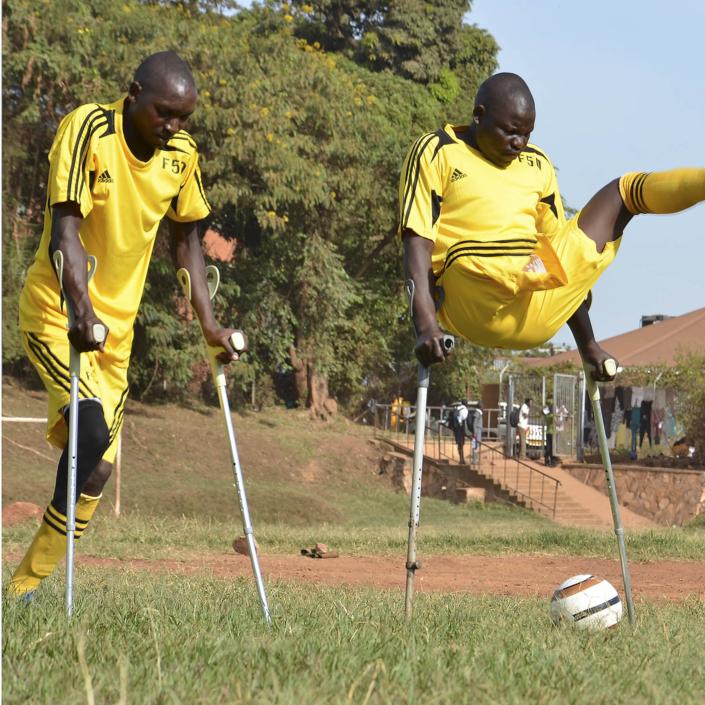
1 Gulu District Amputee Soccer Group Gulu District

# Name of Sport Group Location
1 Tam Pe Ongwalo PWD Sport Club Lira City

The Uganda National Action on Physical Disability (UNAPD) is a national membership organization dedicated to advocating for the rights, dignity, and inclusion of Persons with Physical Disabilities in Uganda

Contact

© 2026 UNAPD. All Rights Reserved.