Start donating poor people

Accessibility Program

Image
Image

Accessibility Program

UNAPD Program

UNAPD's Work on Accessibility in Uganda

The Uganda National Action on Physical Disability (UNAPD) was established in 1998 as a platform for voicing the concerns of Persons with Physical Disabilities, with the goal of realizing a barrier-free environment where they can fully enjoy their rights. UNAPD was formed because persons with physical disabilities — who make up over 60% of Uganda's PWD population — lacked a strong national organization of their own.

UNAPD is guided by the vision of "a society where Persons with Physical Disabilities live in dignity," and a mission to "advance member efforts in removing barriers that prevent PWPDs from enjoying their rights through advocacy, capacity building, and networking."

As a rights-based organization, UNAPD engages partners and stakeholders at both national and district levels to build a barrier-free environment — ensuring PWDs access quality services as a matter of right, not favor. Today, UNAPD represents 40 registered member district associations with over 8,000 individual members, and remains an active voice in Uganda's broader disability movement.

What "Accessibility" Means

Under Uganda's National Accessibility Standards (NAS), accessibility is defined as the universal possibility for anyone to reach, enter, and use a public facility with ease, dignity, and without undue risk of injury. This is built on six core doctrines:

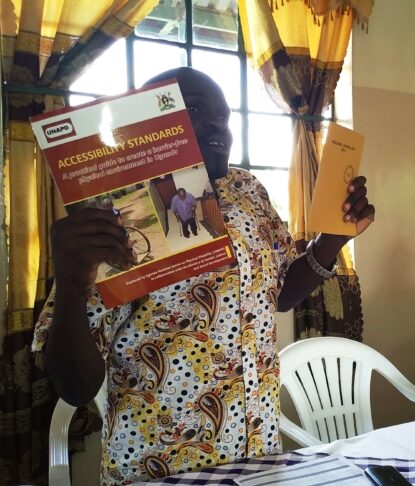
These doctrines underpin the National Accessibility Standards developed by UNAPD as a guiding manual for Uganda's construction industry.

The Origins of Uganda's Accessibility Movement

UNAPD identified the inaccessible physical environment as one of the greatest barriers PWDs face in accessing services equally. Although accessibility was already a right under Article 9 of the UN-CRPD and the PWD Act (2006), Uganda had no practical guidance for architects, engineers, and planners on building accessible facilities.

To close this gap, UNAPD spearheaded the development of Uganda's first-ever Accessibility Standards, adopted by the Ministry of Gender, Labour and Social Development (MoGLSD) in 2010 as the national guide for barrier-free design.

UNAPD went further, ensuring these standards were embedded into law through the Building Control Act (2013) and the PWD Act (2006, later amended in 2020). UNAPD also established the National Accessibility Audit Team (NAAT) — its technical wing responsible for training and auditing public buildings for compliance.

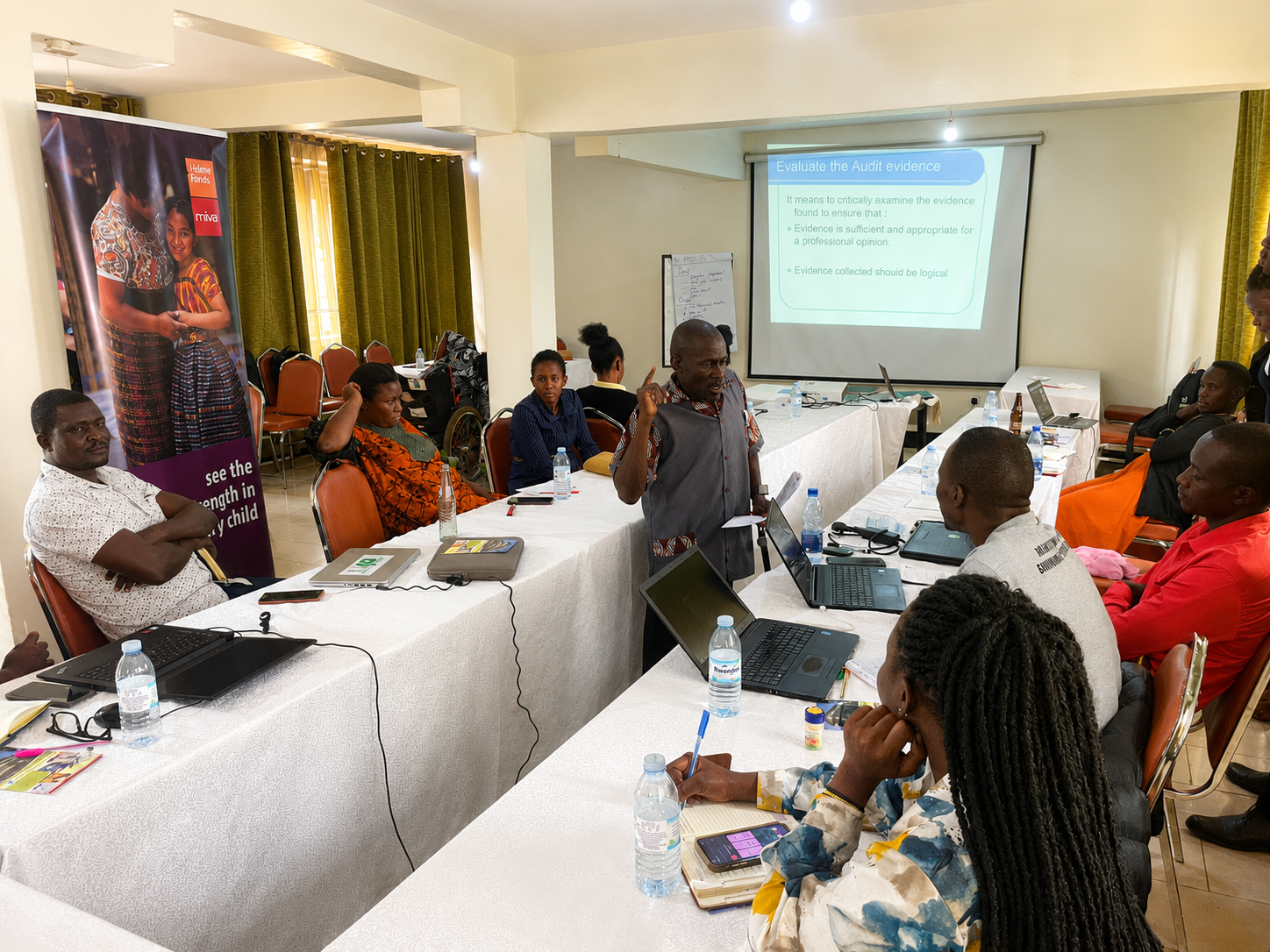
For nearly a decade, NAAT has trained stakeholders across government and civil society and conducted accessibility audits of both government and private-sector buildings, issuing recommendations for improvement. NAAT remains the only recognized entity in Uganda for physical accessibility auditing, led by Team Leader Mukasa Apollo, who also serves as UNAPD's Executive Director and formerly sat on the National Building Review Board representing PWDs.

Impact of UNAPD's Accessibility Work

Policy Framework

UNAPD has directly shaped Uganda's accessibility standards, the Building Control Act (2013), WASH guidelines, and curriculum reviews across sectors.

Review of the National Accessibility Checklist

After eight years of using the original accessibility checklist, UNAPD partnered with the National Building Review Board (NBRB) to revise it in line with the National Building Code of 2019. The updated tool — now a nationally recognized audit instrument — is used to:

Accessibility Auditing

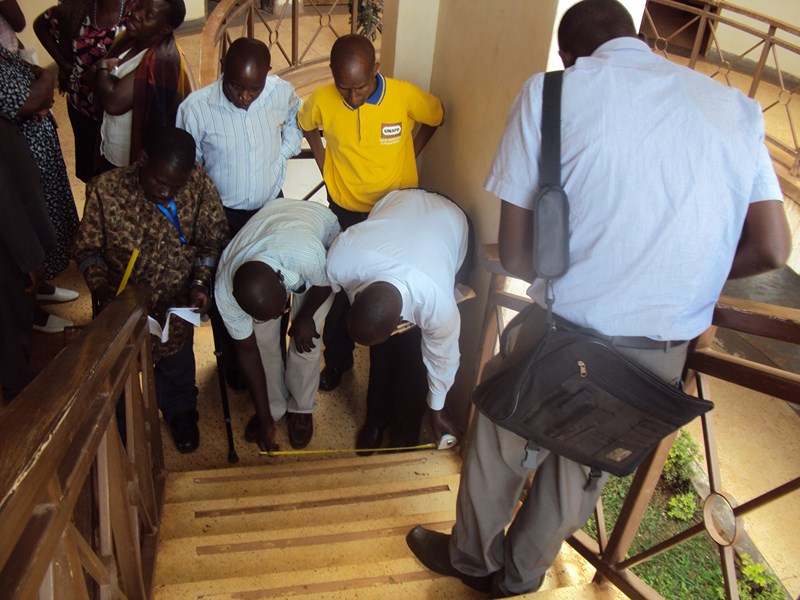
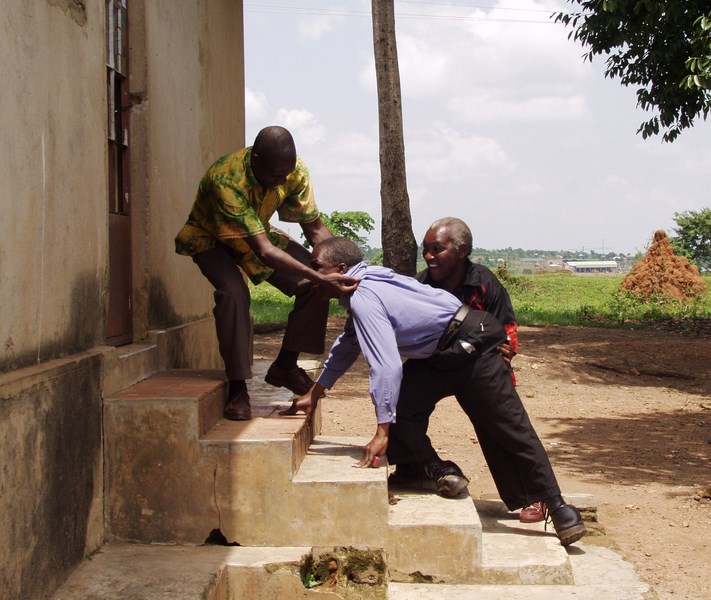
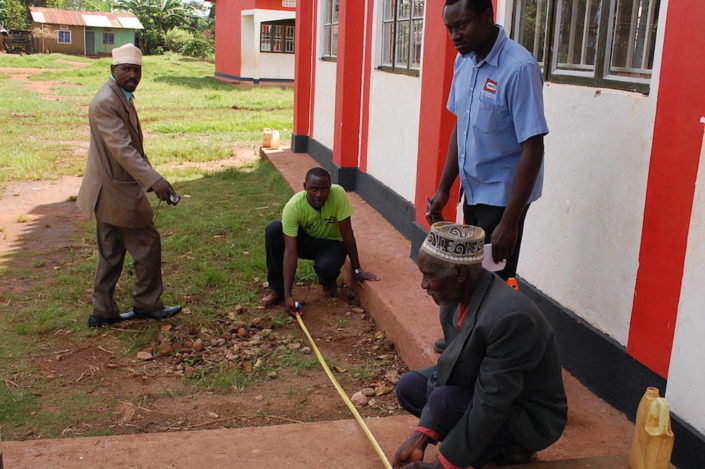
Accessibility auditing is a systematic assessment of how well a facility enables PWDs to access, use, and move through it independently and with dignity. In Uganda, this practice is anchored in the National Accessibility Standards (launched 2010) and became legally binding under the Building Control Act (2013).

Accessibility Auditing

Accessibility auditing is a systematic assessment of how well a facility enables PWDs to access, use, and move through it independently and with dignity. In Uganda, this practice is anchored in the National Accessibility Standards (launched 2010) and became legally binding under the Building Control Act (2013).

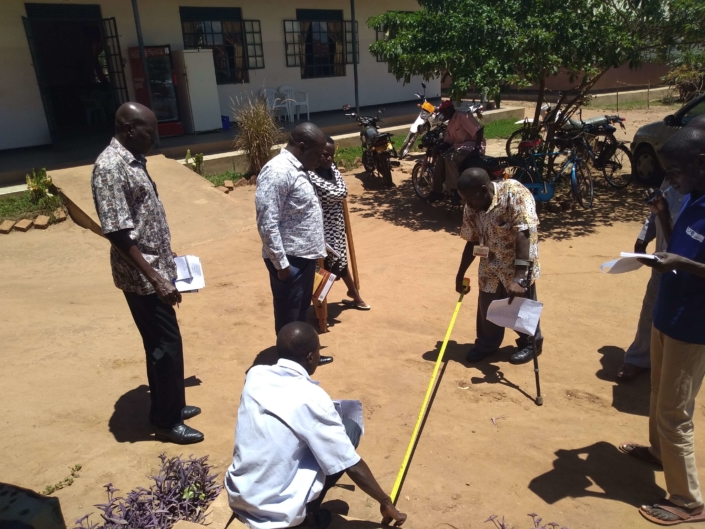
How audits are conducted:

Tool selection/adaptation

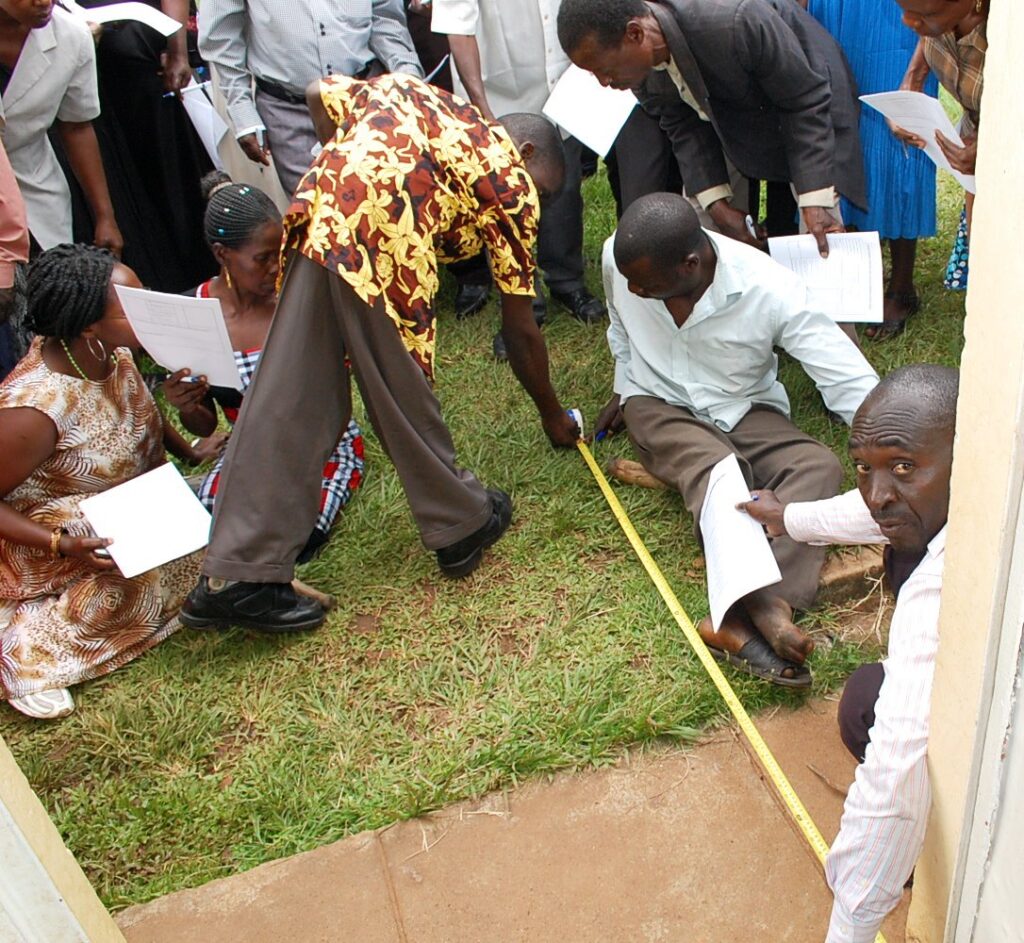
using a structured checklist covering wayfinding, parking, ramps, doorways, corridors, sanitary facilities, signage, and communication access

Team composition

Team composition: audit teams include at least one person with lived experience of disability alongside a technical/planning professional.

Site walk-through and scoring

Site walk-through and scoring: Facilities are inspected item-by-item (Yes/No/Not Applicable), with specific barriers documented.

Reporting and validation

findings are compiled, shared with facility management or authorities, and referred to National Accessibility Auditing Committees for follow-up.
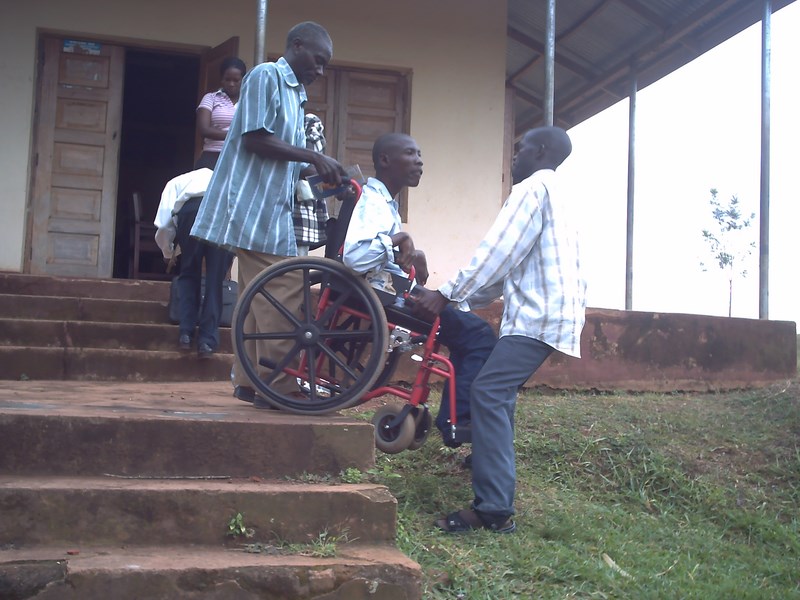
Purpose of accessibility audits:

In Uganda, this practice is anchored in the National Accessibility Standards (launched 2010) and became legally binding under the Building Control Act (2013).

Ensuring that the needs and rights of persons with disabilities are considered throughout humanitarian planning and implementation.

producing facility-level findings used by Organizations of Persons with Disabilities (OPDs) to push for change (e.g., the NUDIPU–Sight Savers audits of vocational schools in Gulu, and Kalangala health facility audits under the Make Way Project).

Baseline-setting and monitoring — establishing a starting point to track incremental improvements.

The audit process itself educates facility staff, doubling as an awareness tool.

Institutional Strengthening: District Accessibility Audit Teams (DAATs)

District Accessibility Audit Teams/Committees are the local enforcement arm of Uganda's National Accessibility Standards. While a National Accessibility Auditing Committee provides oversight, DAATs bring compliance work closer to where construction actually happens — essential given Uganda's 140+ districts.

Supporting PWD Representation on Building Committees

With the Building Control Act (2013) and the establishment of the National Building Review Board (NBRB) in 2018, district/urban building committees — responsible for reviewing building plans, issuing permits, and supervising construction — are required by law to include a PWD representative.

Concerned about ensuring these representatives were qualified and accountable, UNAPD engaged the National Council for Persons with Disabilities (NCPD) to develop formal selection criteria. This criteria was approved by the NCPD Board in November 2020 and is now used by district disability councils when nominating PWD representatives.

Eligibility criteria: Nominees must be a PWD (as defined under the PWD Act 2020), hold at least an 'O' level certificate or equivalent, be 18 years or older, have at least 3 years of active experience in disability work, reside in the district/urban council, and be committed and self-motivated.

Result: By the end of 2024, 42 PWDs had been nominated by district disability councils to represent PWDs on Urban/Municipal Building Control Committees.

Attitudinal Change

UNAPD has also driven the first-ever National Accessibility Awards, recognizing efforts to promote accessible environments and shifting broader public attitudes toward disability inclusion in Uganda.

The Uganda National Action on Physical Disability (UNAPD) is a national membership organization dedicated to advocating for the rights, dignity, and inclusion of Persons with Physical Disabilities in Uganda

Contact

© 2026 UNAPD. All Rights Reserved.