1. Sitting Volleyball
Who it's for: Athletes with lower-limb impairments, including amputations and paralysis affecting the legs.
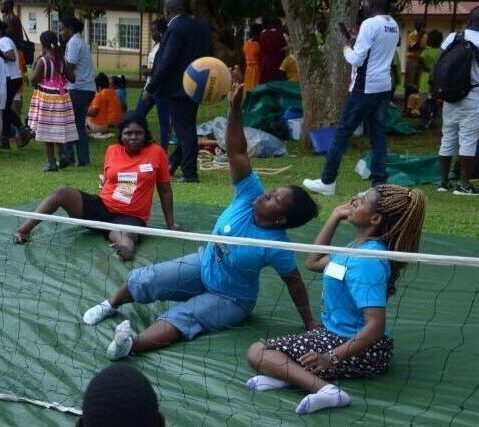
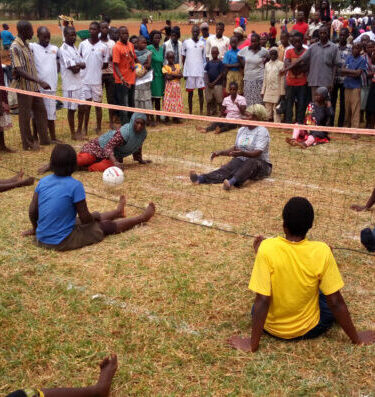
How it's played: Sitting volleyball follows the same basic principles as standing volleyball whereby two teams of six aim to land the ball in the opponent's half but with one critical rule: a player's body, between the buttocks and the shoulders, must stay in contact with the floor whenever they play the ball. Players move around the court by sliding on the floor rather than standing or walking. The court is smaller than a standard volleyball court, and the net is lower, which keeps the game fast and close to the ground.
Classification: Internationally, players are grouped into two classes that is "Minimally Disabled" and "Disabled" based on the severity of their impairment, with teams limited to one minimally-disabled player on court at a time to keep competition even.
Why it matters for UNAPD: Because it requires no standing or walking, sitting volleyball is one of the most accessible team sports for people with significant lower-limb impairments, and has proven especially popular in UNAPD's community sport groups.
2. Amputee Soccer (Amputee Football)
Who it's for:
Outfield players with a lower-limb amputation; goalkeepers with an upper-limb amputation.
How it's played:
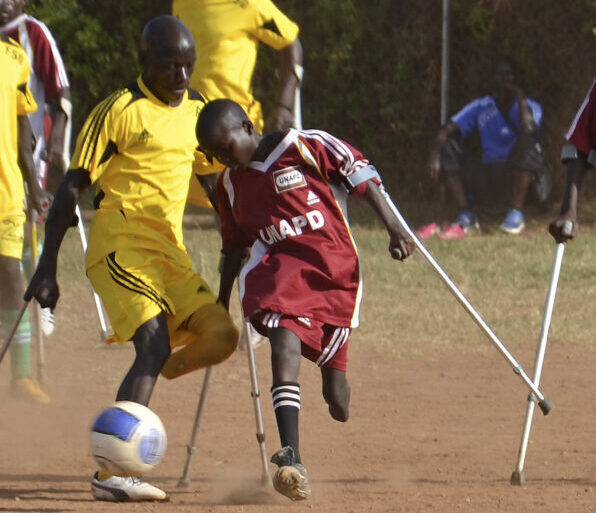
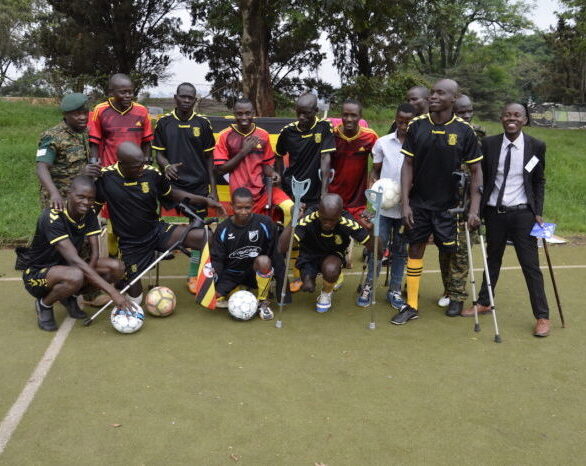
Played on a smaller pitch than standard football, with seven players per team (six outfield players and one goalkeeper). Outfield players play without prosthetics, moving and controlling the ball using forearm (Loftstrand) crutches a skill that takes real training to master. Goalkeepers, who have an upper-limb amputation, play with two legs but are confined to the penalty area. There is no offside rule, and matches are typically played in two halves.
Why it matters for UNAPD:
Amputee soccer channels a passion many Ugandan youth already have for football into a discipline built specifically around their physical reality turning an amputation from a barrier to participation into simply a different way of playing the game.
3. Deaf Volleyball
Who it's for:
Athletes who are Deaf or hard of hearing.
How it's played:
Deaf volleyball uses the same rules, court, and scoring as standard volleyball and the adaptation isn't to the game itself but to how it's officiated and coached. Referee whistles and calls are replaced or reinforced with visual signals (such as flags or lights) so that play can be followed without relying on sound, and communication between teammates happens through sign language.
Classification:
At the international level (Deaflympics competition), eligibility is defined by a hearing loss of at least 55 decibels in the better ear, and athletes compete without hearing aids or cochlear implants to keep the playing field level.
Why it matters for UNAPD:
Because the sport itself is unmodified, Deaf volleyball lets Deaf athletes compete on equal technical footing with hearing players and the barrier removed is one of communication and access, not of the game's physical demands.
.
1. Sitting Volleyball
Who it's for: Athletes with lower-limb impairments, including amputations and paralysis affecting the legs.
How it's played: Sitting volleyball follows the same basic principles as standing volleyball whereby two teams of six aim to land the ball in the opponent's half but with one critical rule: a player's body, between the buttocks and the shoulders, must stay in contact with the floor whenever they play the ball. Players move around the court by sliding on the floor rather than standing or walking. The court is smaller than a standard volleyball court, and the net is lower, which keeps the game fast and close to the ground.
Classification: Internationally, players are grouped into two classes that is "Minimally Disabled" and "Disabled" based on the severity of their impairment, with teams limited to one minimally-disabled player on court at a time to keep competition even.
Why it matters for UNAPD: Because it requires no standing or walking, sitting volleyball is one of the most accessible team sports for people with significant lower-limb impairments, and has proven especially popular in UNAPD's community sport groups.
2. Amputee Soccer (Amputee Football)
Who it's for:
Outfield players with a lower-limb amputation; goalkeepers with an upper-limb amputation.
How it's played:
Played on a smaller pitch than standard football, with seven players per team (six outfield players and one goalkeeper). Outfield players play without prosthetics, moving and controlling the ball using forearm (Loftstrand) crutches a skill that takes real training to master. Goalkeepers, who have an upper-limb amputation, play with two legs but are confined to the penalty area. There is no offside rule, and matches are typically played in two halves.
Why it matters for UNAPD:
Amputee soccer channels a passion many Ugandan youth already have for football into a discipline built specifically around their physical reality turning an amputation from a barrier to participation into simply a different way of playing the game.
3. Deaf Volleyball
Who it's for:
Athletes who are Deaf or hard of hearing.
How it's played:
Deaf volleyball uses the same rules, court, and scoring as standard volleyball and the adaptation isn't to the game itself but to how it's officiated and coached. Referee whistles and calls are replaced or reinforced with visual signals (such as flags or lights) so that play can be followed without relying on sound, and communication between teammates happens through sign language.
Classification:
At the international level (Deaflympics competition), eligibility is defined by a hearing loss of at least 55 decibels in the better ear, and athletes compete without hearing aids or cochlear implants to keep the playing field level.
Why it matters for UNAPD:
Because the sport itself is unmodified, Deaf volleyball lets Deaf athletes compete on equal technical footing with hearing players and the barrier removed is one of communication and access, not of the game's physical demands.
.
4. Blind Football (5-a-Side Football)
Who it's for: Athletes who are blind or have a severe visual impairment.
How it's played: A fast, physical five-a-side variant of football played on a smaller pitch enclosed by rebound boards (so the ball never goes out of play). All outfield players wear opaque eyeshades to ensure a level playing field regardless of how much residual vision they have, while the goalkeeper is sighted and doubles as a directional guide. The ball contains a noise-making device i.e. usually small bells or rattles so that players can track it by sound, and players call out "Voy" (Spanish for "I go") when approaching the ball to avoid collisions. Spectators are asked to stay silent during play so athletes can hear the ball and each other's calls.
Why it matters for UNAPD: Blind football demonstrates that visual impairment doesn't have to mean exclusion from a sport as central to Ugandan community life as football it simply requires different senses and different rules.
5. Goalball
Who it's for: Athletes with visual impairments, from partial sight to total blindness.
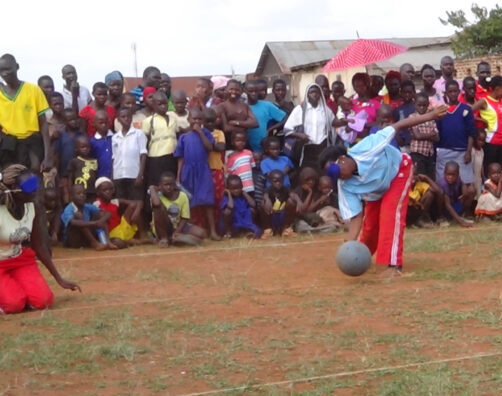
How it's played: Goalball is unique to disability sport invented in 1946 to support the rehabilitation of visually impaired World War II veterans, and now a Paralympic sport in its own right. Two teams of three face off on a court roughly the size of a volleyball court. All players wear blindfolds regardless of how much vision they have, and the objective is to roll a heavy ball fitted with internal bells along the floor and past the opposing team's goal line, which spans the entire width of the court. Defenders listen for the ball's sound and dive to block it with their bodies. As with blind football, silence from spectators is essential so players can track the ball by ear.
Why it matters for UNAPD: Because every player is blindfolded, sighted or not goalball places all participants on genuinely equal footing, making it a powerful tool for building confidence among newly blind or visually impaired participants.
6. Boccia
Who it's for: Athletes with significant impairments affecting motor control in all four limbs most commonly cerebral palsy, but also stroke, traumatic brain injury, muscular dystrophy, or other non-progressive locomotor conditions.
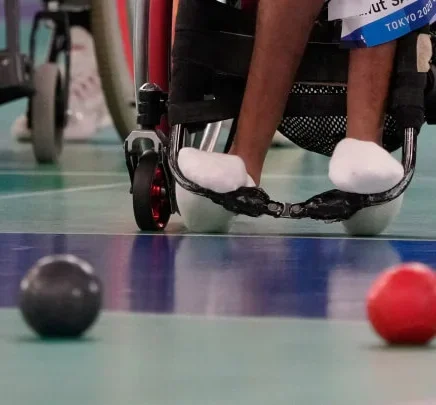
How it's played: Often described as a Paralympic cousin of lawn bowls, boccia is a precision game played indoors on a smooth court. Players throw, kick, or use a ramp to send leather balls as close as possible to a white target ball (the "jack"). Points are scored for every ball closer to the jack than the opponent's nearest ball. It is one of only two sports (alongside goalball) developed exclusively for the Paralympic Games, with no able-bodied equivalent.
Classification: Athletes compete in one of four classes (BC1–BC4) based on functional ability from athletes who need an assistant to hand them the ball, to those with enough arm and hand control to propel the ball unaided, to a ramp-assisted class for athletes with the most severe impairments.
Why it matters for UNAPD: Boccia's assisted-play options (ramps, aides) mean that even PWDs with the most severe physical impairments often the most excluded from sport entirely have a genuine competitive pathway.
7. Game and Play
What it is: Unlike the codified international disciplines above, "Game and Play" refers to UNAPD's foundational, low-barrier physical activities, simple movement games, motor-skill exercises, and adapted play, used at the community level, particularly with children, first-time participants, and PWDs with more complex or multiple impairments (including intellectual and developmental disabilities).
Why it matters for UNAPD: Not every participant is ready to step straight into a structured discipline like sitting volleyball or goalball. Game and Play activities serve as the entry point, building basic movement confidence, social interaction, and enjoyment of physical activity before some participant’s progress into a specific competitive discipline. It reflects UNAPD's belief that sport should have no minimum bar for entry.
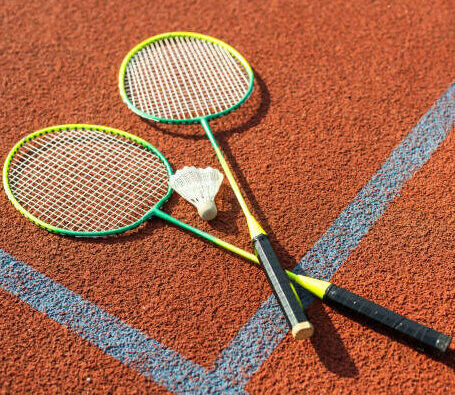
8. Badminton (Para Badminton)
Who it's for: Athletes across a wide range of physical impairments, competing either from a wheelchair or standing position.
How it's played: Para badminton follows the same court, net, and scoring rules as Olympic badminton matches are best of three sets, each won by the first player to 21 points. Athletes compete in singles, doubles, and mixed doubles.
Classification: There are six sport classes: two wheelchair classes (WH1, for athletes with impairment affecting both legs and trunk; WH2, for athletes with less trunk involvement), two standing lower-limb classes (SL3 and SL4, differing by severity), a standing upper-limb class (SU5), and a short-stature class (SH6) for athletes with conditions such as achondroplasia.
Why it matters for UNAPD: Para badminton's wheelchair and standing categories mean it can accommodate a very wide range of UNAPD's membership from wheelchair users to ambulant PWDs with limb differences within a single, relatively low-equipment sport.
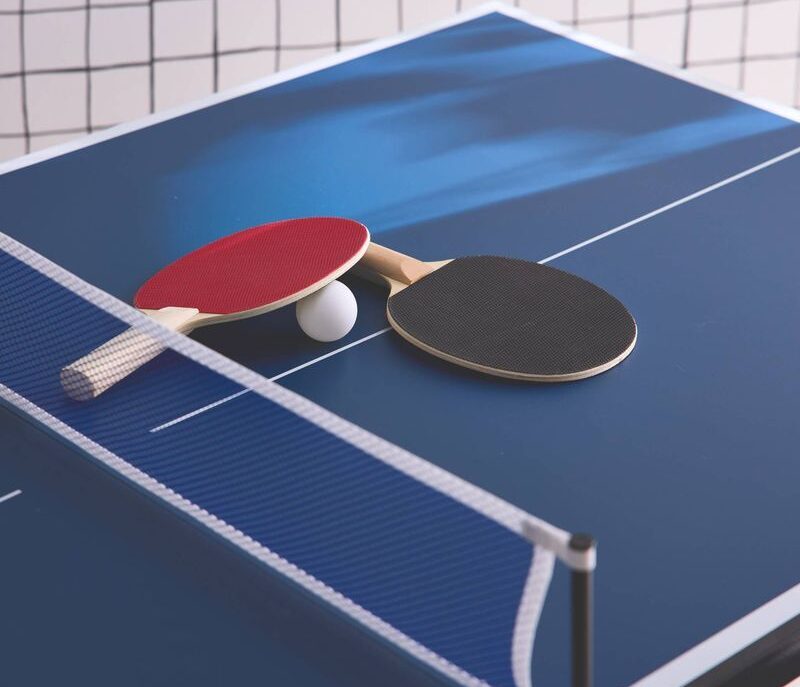
9. Table Tennis (Para Table Tennis)
Who it's for: Athletes with physical or intellectual impairments, competing either seated in a wheelchair or standing.
How it's played: Para table tennis uses standard International Table Tennis Federation rules, with slight serve modifications for wheelchair athletes.
Classification: Athletes are graded into 11 classes. Classes 1–5 are wheelchair classes, ranging from Class 1 (no sitting balance, severely affected playing arm) to Class 5 (normal sitting balance and full arm/hand function). Classes 6–10 are for standing athletes, again ranging from severe to moderate impairment of the arms or legs. Class 11 is reserved for athletes with an intellectual impairment.
Why it matters for UNAPD: With classes spanning from the most severely affected wheelchair users to standing athletes with minor impairments, table tennis offers UNAPD one of the most inclusive on-ramps into competitive para-sport, requiring only a table, net, and paddle to get started at community level.
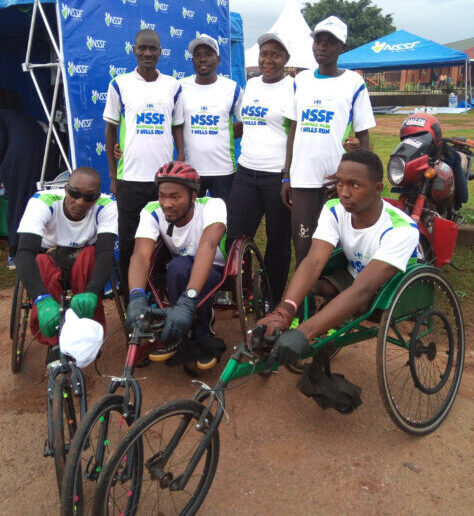
10. Athletics (Para Athletics)
Who it's for: Athletes across virtually every impairment category i.e. physical, visual, and intellectual competing in track and field events.
How it's played: Para athletics covers the full range of Olympic track and field events, sprints, distance running, jumps, and throws — adapted as needed. Wheelchair racers compete in purpose-built racing chairs; athletes with visual impairments may run with a sighted guide, often tethered by a short cord; amputee athletes may use running-specific prosthetics; and throwing events may be contested from a seated throwing frame for athletes without the balance to throw standing.
Classification: Athletics uses a detailed classification system (T for track, F for field, e.g. T11–T13 for visual impairment, T42–T64 for various limb impairments and amputations) to ensure athletes compete against others with a comparable level of function.
Why it matters for UNAPD: Athletics has historically been the most visible gateway discipline into Paralympic sport worldwide, and its wide event range from sprinting to seated throws, means UNAPD can identify and nurture raw talent across almost every disability type it works with.
These disciplines form the technical backbone of UNAPD's community sport programming — each selected not just for competitive potential, but because it opens a genuine door to participation for a specific group of PWDs who might otherwise be shut out of sport altogether.